
Griffin, GA · Garage Door Service
Why Your Griffin Garage Door Acts Older Than It Looks
Griffin's housing runs 1948 to 2007 with a median build year near 1990. Here's what that means for garage door insulation, weight, and seasonal upkeep.
- Repairs & new doors
- Springs & openers
- Serving 6 nearby communities
The Seasonal Bit
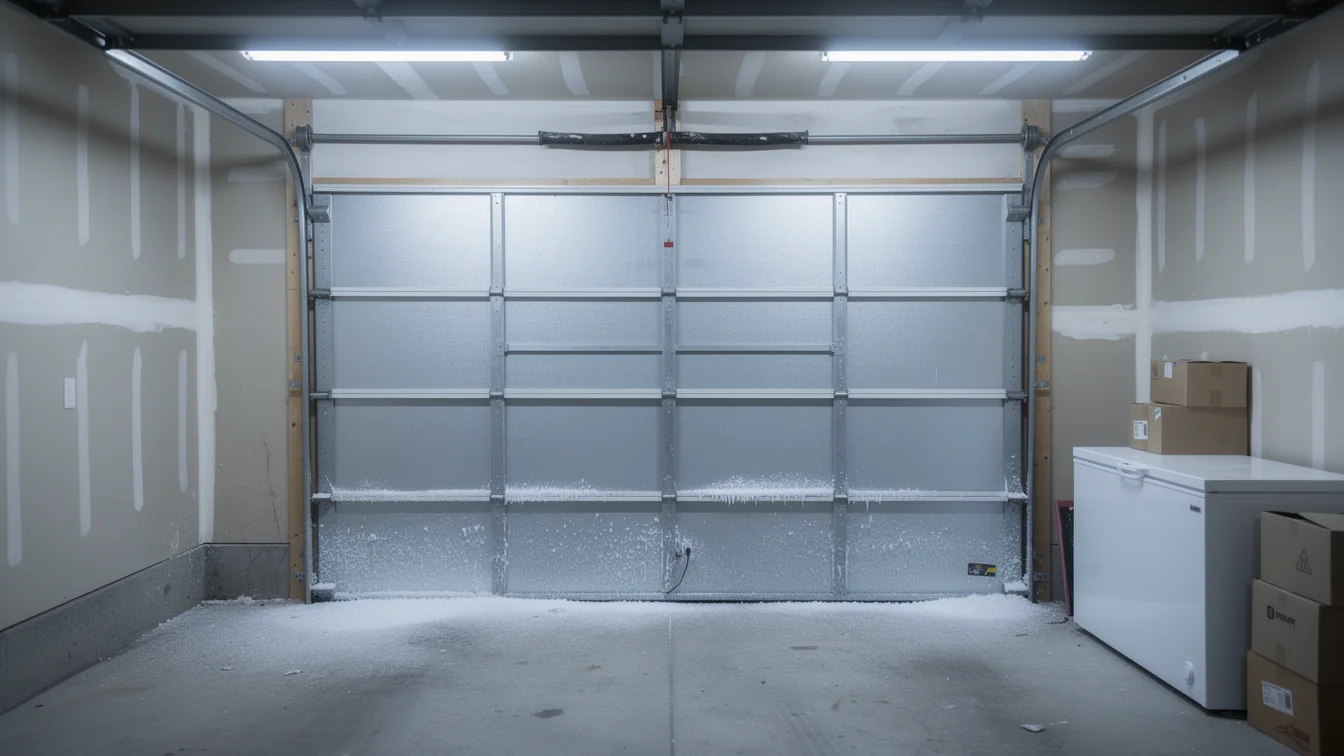
Griffin sits in a cold-moderate band, which means winters bring real freeze-thaw swings but nothing like the hard winters you'd get farther north. That matters for a garage door because the swing itself, not the depth of cold, is what works metal and rubber loose over time. A door that goes from 28 degrees overnight to 55 by afternoon, several times a week through a Georgia winter, puts more cycling stress on weatherstripping and hardware than a steady deep freeze would. Springs don't like it either. Cold tightens the coil and changes how much force it takes to lift the door, which is why a torsion spring that was fine in July can feel noticeably heavier come January. None of this is dramatic. It's slow wear, the kind that shows up as a door that starts sticking at the same point in its travel every winter, or a motor that strains a little more than it used to. If your opener has been groaning on cold mornings, that's the freeze-thaw cycle doing its quiet work, not a sign the unit is failing outright.
The Situation
Housing across this service area was built mostly between 1948 and 2007, with the median landing around 1990, and the bulk of it clusters in the 1980s and 90s across the seventeen named pockets that make up Griffin and the surrounding county. That spread matters because garage doors don't get replaced on the same schedule as roofs or water heaters. A lot of owners are still running the door that came with the house, or a near-match swap from a decade or two back. For houses from the earlier end of that range, that means doors built before insulation rules tightened meaningfully in residential construction. Those doors are often a single layer of steel or wood with no foam core at all, which is fine structurally but does nothing to stop a garage from running ten or fifteen degrees colder than the rest of the house in winter. If you're not sure where your house falls, the build era usually lines up with the door era unless someone's already swapped it.
How Local Conditions Play In
Put the climate and the housing stock together and you get a specific, common problem: uninsulated or thinly insulated doors fighting freeze-thaw cycling on hardware that's often original to a house from the 1948-2007 range. The symptom isn't usually a door that won't open. It's a door that's gotten loud, or one where the bottom seal has gone stiff and cracked, letting cold air and leaves in along the floor. Steel panels from the older end of that build range also tend to be heavier gauge than what's sold new today, which means the springs sized for them were calculated for that weight. If a spring gets replaced with a generic modern kit instead of one matched to the door's actual weight, the door will lift unevenly or slam down fast, especially once cold weather adds resistance. If you're out in East Griffin or toward Experiment, the age of your door very likely tracks the same build era as the house around it, so this isn't a one-off, it's the pattern across most of the area.
Checking It Yourself
Walk out to the garage on a cold morning and look at the bottom seal first. If it's cracked, flattened, or gapping at the corners, cold air is getting in and the rubber has outlived its stretch. Next, open the door by hand with the opener disconnected and see how it feels partway up. It should move smoothly and stay roughly level if you let go. If it drops fast or feels heavy, the spring tension has drifted, which happens faster through repeated cold-to-warm swings than most owners expect. Check the inside face of the panels too, especially on an older steel door: if there's no foam backing or rigid board visible, you're running an uninsulated door, plain and simple. I'll say the honest part here: insulating an old single-layer steel door after the fact with stick-on foam kits helps a little with sound and a little with temperature, but it won't match a door built with a foam core, and on a door already near the end of its life, that money is usually better spent on replacement instead of a patch.
Frequently asked questions
Is my garage door too old to repair instead of replace?
It depends on the door and what's wrong, not just the age. Given how much of the housing here dates to 1948-2007, a lot of doors are decades old but structurally sound, and a spring, cable, or roller swap makes sense. If the panels themselves are rusted through or warped, repair stops being worth it and replacement is the better call.
Why does my door feel heavier in winter?
Cold tightens torsion springs and changes the force needed to lift the door. In a cold-moderate climate like Griffin's, the freeze-thaw swings cycle that tension up and down through the season, which is why a door that lifted easily in summer can feel noticeably stiffer on a cold January morning.
Does my house's build year tell me anything about my door?
Usually, yes. Most houses in this area were built between 1948 and 2007, with a lot clustered in the 1980s and 90s, and garage doors here often match that same era unless a previous owner already swapped it. An older build year is a decent clue that you're looking at a single-layer, uninsulated door.
Related garage door services in Griffin
More garage door guides
Book garage door service in Griffin
Call now or request a quote - tell us what the door is doing and where you are.