Griffin, GA · Garage Door Service
Why Griffin Springs Fail When the Temperature Drops
Griffin's 1980s-90s housing stock and cold-moderate winters put real stress on torsion springs. Here's why doors break down exactly when they do, and what to check first.
- Repairs & new doors
- Springs & openers
- Serving 6 nearby communities
The Seasonal Bit
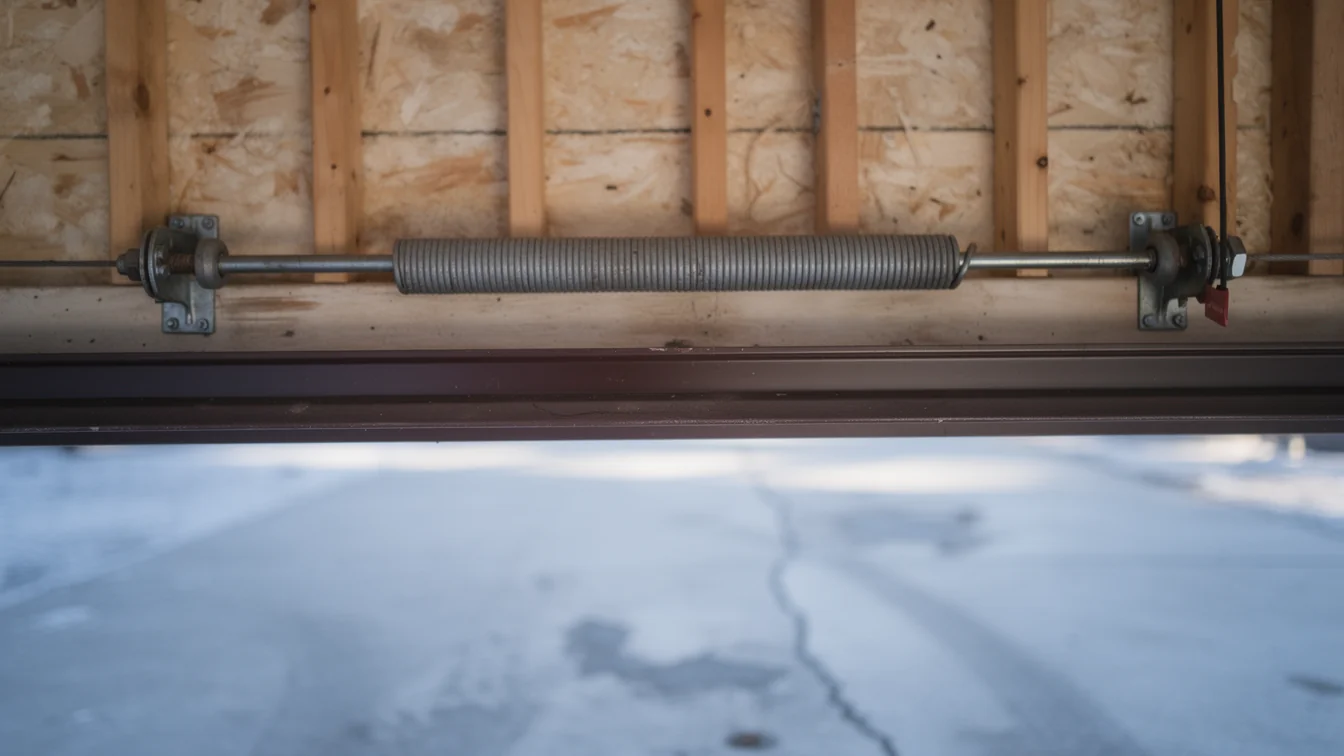
Steel contracts when it gets cold, and a torsion spring is just coiled steel under constant tension. In a cold-moderate climate like Griffin's, the swings aren't brutal, but they're enough. A spring that's been quietly fatiguing for years, carrying a 150-pound double door every day, loses a little flexibility every time the mercury drops. Then one morning the garage is 15 degrees colder than the house, the metal is stiffer than it was in August, and the last few cycles of flex finally snap it.
This isn't a Griffin-specific metal problem, but it is a Griffin-specific timing problem. Most of the houses in this service area were built between 1948 and 2007, with the bulk of the stock going up in the 1980s and 90s. That means a lot of original springs, installed when the house was new, are now thirty-plus years old and sitting right at the end of their rated cycle life. Cold weather doesn't cause the failure. It's the thing that finally exposes a spring that was already most of the way gone.
The Situation
Walk the 17 named areas of this service territory and you'll see the same pattern: a long run of houses from the Reagan-to-Clinton years, median build year right around 1990. That generation of door hardware used torsion springs sized for the door weight of the time, and plenty of those original springs have never been swapped. Thirty-some years of daily cycling, sitting in a cold garage through winter after winter, is exactly the lifespan where these things let go.
With 13,913 owner-occupied houses across the area, that's a large population of doors hitting this age bracket at roughly the same time. It's not one unlucky house. It's a stock of hardware that was all installed in the same decade and is now aging out in the same decade too. When one goes in January, it's rarely a coincidence - it's usually just that house's turn.
How Local Conditions Play In
Griffin sits in a cold-moderate band, not a deep-freeze one. We don't get the extreme swings that snap springs outright from thermal shock. What we get is a steady, repeated small stress: cold mornings, a slightly stiffer coil, a door that gets used anyway because people still leave for work. That repeated small stress is what finishes off a spring that's already near the end of its cycle count from age.
Garaging matters too. A lot of the 1980s and 90s builds in this area have garages that aren't insulated or conditioned, so the door assembly sits at outside temperature most of the winter. That's a different exposure than a detached-garage house in a milder zone, and it's part of why a spring here can fail on a day that wouldn't bother a spring in a warmer part of the state.
Checking It Yourself
You can get a rough read on spring condition without opening anything up. Look at the coil gap - if it's visibly stretched or uneven compared to how it sat when new, that's wear. Listen for the door: a healthy spring lets the door glide up with light effort on the manual release; a tired one makes the opener strain and groan on cold mornings specifically, which is often the first sign before the full break.
I'll be honest about the limit here: once a torsion spring is actually broken, there's no DIY fix that's safe. The door is under extreme tension even when it looks still, and trying to wind or release a spring without the right bars has put people in the hospital. If you hear that bang and the door won't lift, that's a call, not a weekend project.
Frequently asked questions
Why did my spring break on such a cold morning?
It's less about that one cold morning and more about the spring's age catching up with it. Steel gets stiffer in the cold, and a spring that's been flexing for thirty-plus years in a house built in the 1980s or 90s is already near the end of its cycle life. The cold just tips it over on that particular day.
Does Griffin get cold enough to cause this on its own?
No. Griffin's climate is cold-moderate, not severe. The temperature swing alone rarely snaps a healthy spring. It's the combination of an aging coil, decades of daily cycling, and an unheated garage that does it - cold is the trigger, age is the cause.
Is it worth replacing both springs if only one breaks?
If your house is from the same build era as most of this area's stock, the second spring is usually close behind in age and wear, even if it hasn't let go yet. Replacing both at once means you're not paying for a second service call a few months later.
Can I just lubricate the spring to extend its life?
Lubrication helps the coils move against each other with less friction, which does reduce wear over time. It won't undo thirty years of metal fatigue, though. Think of it as slowing the clock, not resetting it.
Related garage door services in Griffin
More garage door guides
Book garage door service in Griffin
Call now or request a quote - tell us what the door is doing and where you are.