
Griffin, GA · Garage Door Service
Why a Garage Door Jumps Its Track in Griffin
Griffin homes built between 1948 and 2007 see off-track doors for different reasons depending on the decade. Here's what actually causes it and how to check your own tracks.
- Repairs & new doors
- Springs & openers
- Serving 6 nearby communities
The Seasonal Bit
Griffin sits in a cold-moderate climate band, which means the ground underneath a slab or garage floor goes through a real freeze-thaw cycle most winters, even if it's a mild one by national standards. That cycle shifts concrete slightly, and a garage door track that's bolted to a jamb attached to a slab moves with it. Over a few winters the vertical tracks can rack out of plumb by a fraction of an inch - not enough to notice by eye, enough for a roller to start riding the edge of the track instead of the center. Spring and fall temperature swings do something similar to the steel track itself, which expands and contracts slightly with heat. None of this is dramatic. It's slow, and it's cumulative, which is why a door that's tracked fine for fifteen years can suddenly start binding or popping a roller with no single obvious cause.
The Situation
Housing across the Griffin service area mostly dates from 1948 to 2007, with the bulk of stock going up through the 1980s and 90s across the 17 named areas we work in. That matters here because a lot of those garages still have their original track and roller hardware - steel didn't get swapped out just because the opener did. Original track brackets from that era used fewer lag points into the jamb than what gets installed today, and after 30-plus years of normal opening and closing, those brackets work loose. A loose bracket lets the track flex sideways every time the door runs, and a track that flexes is a track a roller eventually jumps. Newer builds in the service area, closer to 2007, are more likely to have had a track replacement already, but plenty of the 1980s-90s stock hasn't.
How Local Conditions Play In
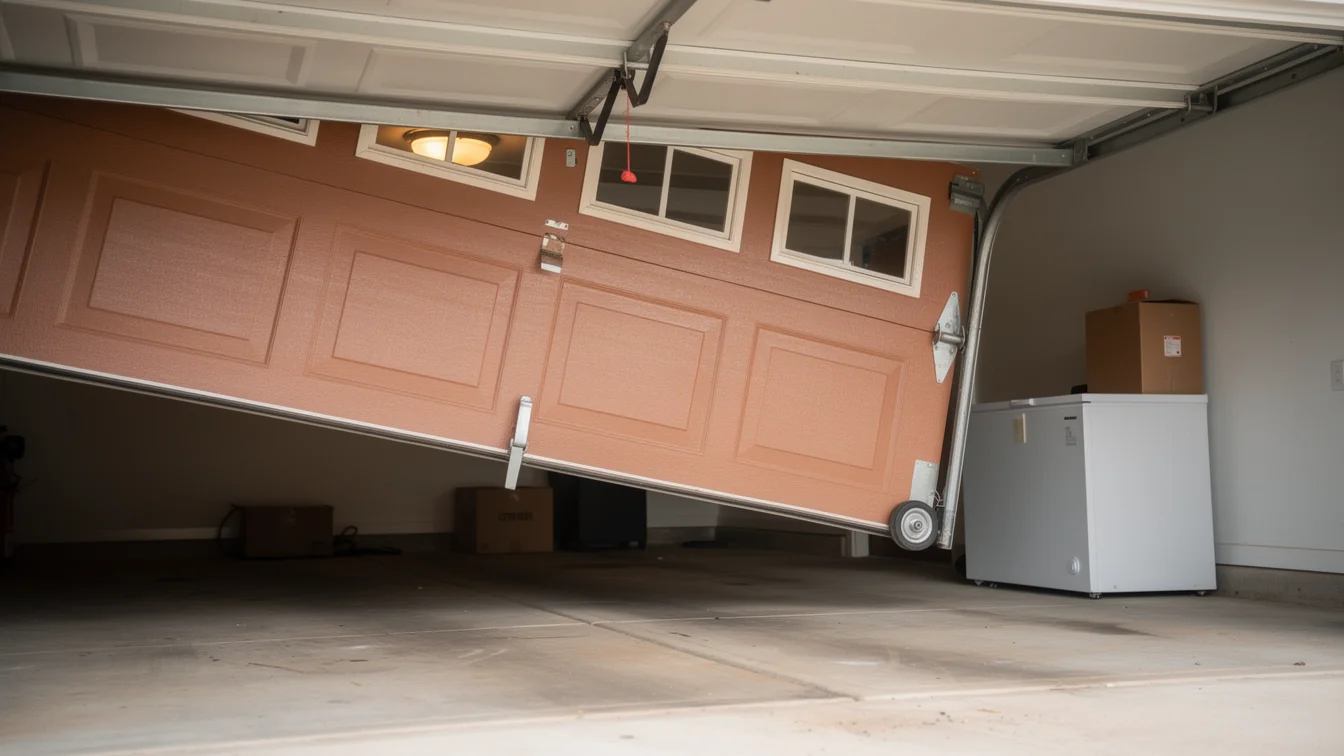
Put the slab movement from the cold-moderate climate together with 30-to-40-year-old hardware and you get the two most common off-track calls we see: a bent track from a bracket that worked loose and let the rail bow outward, and a roller that's worn oval-shaped from running against a track edge for months before anyone noticed. Houses built mid-century through the 1980s in this area often have single-car garages with narrower tracks and tighter tolerances, so even a small amount of rack shows up faster as a grinding or scraping sound before the door actually leaves the rail. A door that's been quietly rubbing for a season is a different repair than one that jumped suddenly - the first usually just needs bracket and track adjustment, the second often means a bent section needs to come out.
Checking It Yourself
Open the door partway and look down the length of each vertical track from the floor up - you're checking for a track that bows outward instead of running in a straight line. Check every bracket bolt where the track meets the jamb; if you can wiggle a bracket by hand, that's your loose point. Look at the rollers themselves where they sit in the track - flat spots or a visibly oval shape mean they've been grinding on an edge. One honest limit here: if a track is bent rather than just loose, don't try to bend it back into shape yourself. A track that's been forced straight after bending usually fails again, sooner, and sometimes under load. That's a track-section swap, not a tune-up, and it's worth having someone look at it in person rather than guessing from a bend you can't fully see.
Frequently asked questions
Why did my garage door suddenly come off the track with no warning?
Usually it wasn't sudden - a bracket or roller had been working loose for months, often from slab movement during winter freeze-thaw or decades of use on original 1980s-90s hardware. The door running fine one day and off the next just means the wear finally crossed a threshold.
Is an off-track door always a track replacement?
No. If the track is only bowed slightly and the bolts are loose, re-securing the brackets and realigning the rail often fixes it. If the track itself is visibly bent, that section usually needs to be swapped rather than straightened back into place.
Does Griffin's climate actually affect garage door tracks?
Indirectly, yes. The cold-moderate freeze-thaw cycle here shifts slab concrete slightly over the years, and since tracks bolt into the jamb attached to that slab, the movement can rack a track out of plumb over time, especially on older brackets.
Related garage door services in Griffin
More garage door guides
Book garage door service in Griffin
Call now or request a quote - tell us what the door is doing and where you are.