Griffin, GA · Garage Door Service
Garage Door Maintenance for Griffin, GA Homes
Preventive garage door maintenance for Griffin, GA homes built mostly 1948 to 2007. Griffin Garage Door Pros services springs, openers, rollers, and tracks.
- Repairs & new doors
- Springs & openers
- Serving 6 nearby communities
What You Are Seeing
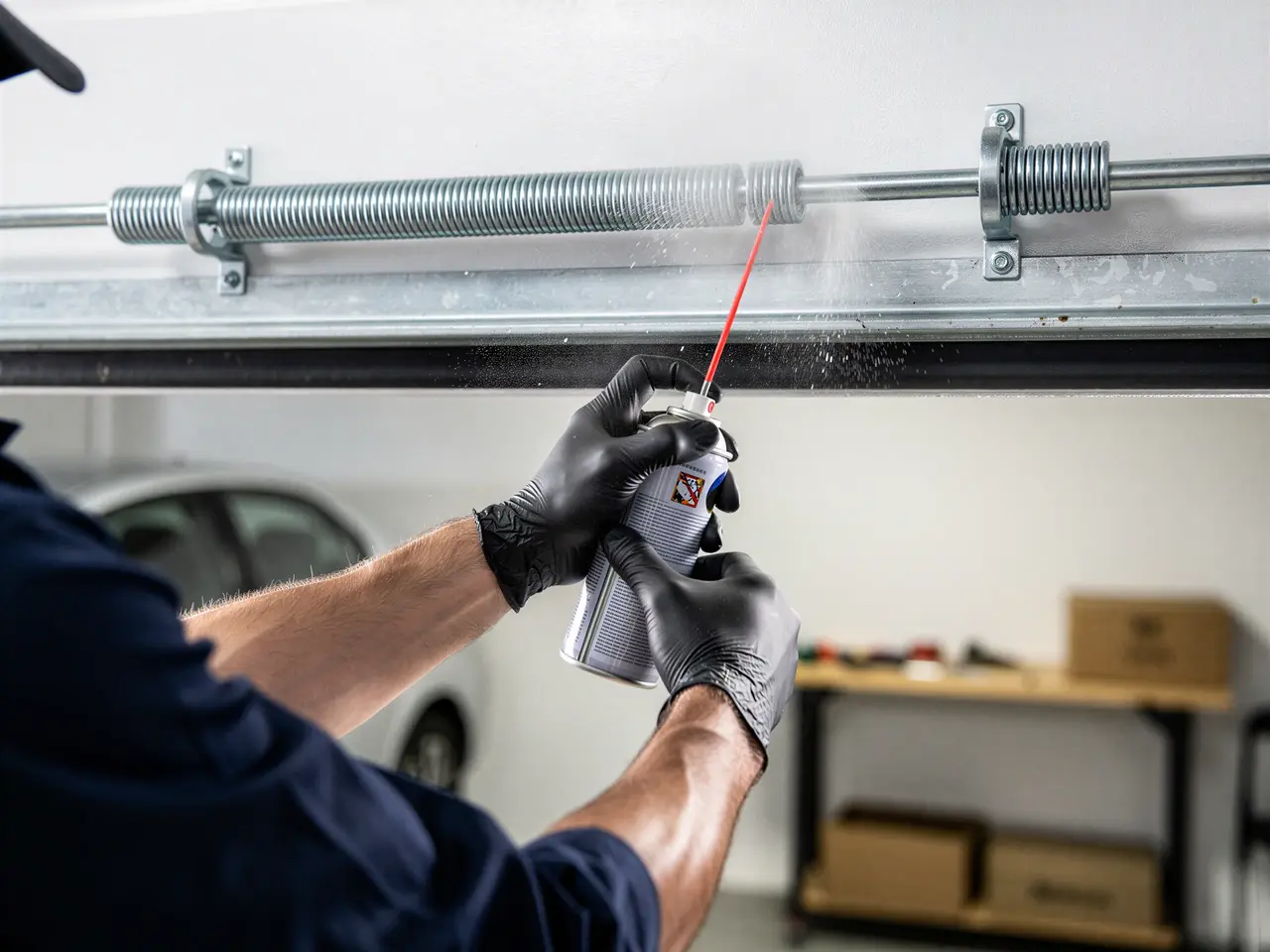
Most calls start the same way: the door hesitates before it moves, or it closes a little crooked and nobody can say when that started. You might hear a grinding roller, feel the opener strain for an extra second before the chain catches, or notice the door drifting shut faster on one side than the other.
None of that is dramatic on its own, which is exactly why it gets ignored. A torsion spring loses a few winds of tension every season and nobody sees it happen. A track bracket works loose a sixteenth of an inch at a time. Across Griffin's housing stock, built between 1948 and 2007 with a median year right around 1990, the doors and openers in service span three or four generations of hardware. A house from the late 1940s may still be running original side-mount torsion springs; a house from the 1990s is more likely on extension springs with a chain-drive opener bolted into joists that have had thirty years to settle. Maintenance means catching the early signs in whichever generation of hardware your house happens to have, not applying one fix to every door.
What You Pay
We don't have a flat number to post here, and we wouldn't trust a page that gave you one before seeing the door. What drives the cost of a maintenance visit is the hardware in front of us: whether the springs are original torsion units from an older build or newer extension springs, how many panels the door has, whether the opener is a simple chain drive or something with a belt and a logic board, and how much the track and rollers have drifted out of line.
Here's the honest limitation: some of the older doors in Griffin's 1948-era housing use spring sizes and track hardware that isn't a stock item anymore. If a part has to be special-ordered, that adds time to the job, and at some point a repair on a door that old costs more than it's worth. We'll tell you when that line has been crossed instead of billing a maintenance visit as if the door is fine.
The Complications
The spread of housing eras in Griffin makes maintenance less of a routine checklist than you'd think. A door on a 1950s build might still have galvanized track that's held up fine for decades, right next to a 1990s build where the track is lighter-gauge and shows rust at the welds first. One tune-up approach doesn't fit both.
Across the 17 named areas that make up the broader service footprint, most of the stock went up in the 1980s and 90s, which means a lot of garages are running openers and spring systems from roughly the same window, now all aging out at the same time. That creates a complication of volume as much as variety: a lot of hardware hitting the same wear point in the same few years. Add a cold-moderate climate that puts steel through real expansion and contraction across the seasons, and lubricant that was fine in August is gummed up by January. Diagnosing a noise or a slow close means knowing which era of hardware you're actually looking at before touching a wrench to it.
What Causes It Around Here
Two things are doing most of the work. First, the age spread. Housing in the Griffin service area was built anywhere from 1948 to 2007, with the typical house going up around 1990, so the openers, springs, and tracks in service today represent several different decades of manufacturing standards. Hardware from the earlier end of that range is simply older than its design life in a lot of cases, and hardware from the 1980s-90s boom across the 17 named areas is now aging out in a cluster rather than one house at a time.
Second, the climate band here sits in the cold-moderate range, which means real seasonal swings rather than a mild year-round temperature. Steel springs and tracks expand and contract with that swing, grease stiffens in cold snaps and thins out in heat, and the cycle fatigues metal faster than a stable climate would. Put an aging housing stock and a seasonal climate together and you get the two most common calls we see: a spring that finally lets go and a track that's walked out of alignment.
Frequently asked questions
How often should I get my garage door serviced in Griffin?
We don't have a one-size answer because it depends on the age of your hardware, but houses here span 1948 to 2007 construction, so a door that's never been serviced is carrying decades of wear in the springs and track. A yearly check catches most problems before they turn into a broken spring or a jammed opener.
Why does my garage door act up more in winter?
The service area sits in a cold-moderate climate band, so steel springs and tracks go through real seasonal expansion and contraction rather than staying at a stable temperature year-round. Grease stiffens in cold weather too, which makes an opener strain harder than it should right as the springs are already under more seasonal stress.
Is it worth maintaining an older door instead of replacing it?
Sometimes, sometimes not. A lot of the housing stock here dates to the earlier end of 1948-2007, and some of those original spring and track sizes aren't stock parts anymore. If a part needs a special order and the door has other wear issues, replacement can end up cheaper and faster than repair. We'll tell you which situation you're in before we start.
Do you cover areas outside Griffin itself?
The maintenance service covers the broader Griffin service area, which includes the 17 named communities with housing stock mostly from the 1980s and 90s. Local detail for each of those towns is covered on their own pages, but the maintenance work itself is the same service across the area.
Related services
By Neighborhood
Maintenance across the Griffin area
We also handle maintenance in these Griffin-area suburbs.
Book garage door service in Griffin
Call now or request a quote - tell us what the door is doing and where you are.