Griffin, GA · Garage Door Service
Is Your Griffin Garage Door Worth Fixing, or Time to Replace It
Griffin homes mostly date to the 1980s-90s inside a 1948-2007 build range. Here's how to tell if your original door and hardware are worth repairing or replacing.
- Repairs & new doors
- Springs & openers
- Serving 6 nearby communities
The Seasonal Bit
Griffin sits in a cold-moderate climate band, which means the swing that matters isn't brutal winters, it's the freeze-thaw cycle repeating through a long shoulder season. A steel panel that's fine in July can bind in January because the slab shifted a sixteenth of an inch and the track never got re-shimmed. We see this most on doors that went in during the original build wave, when tracks were set once and never touched again. It's not dramatic weather damage. It's a slow drift that shows up as a door that's harder to lift every year, and owners usually blame the opener before they blame the track.
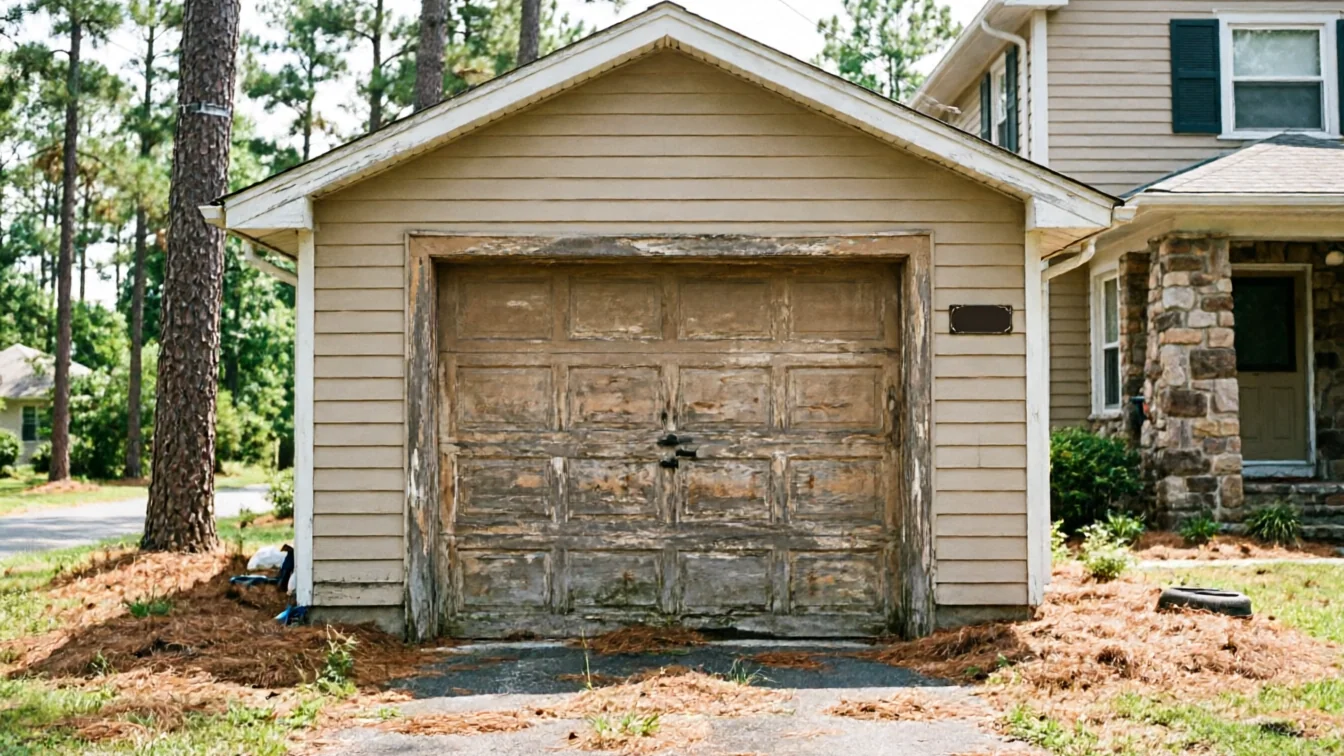
This matters for the fix-or-replace call because a door that's merely out of alignment is almost always worth saving. A door where the steel itself has started to oxidize at the bottom panel from decades of ground moisture, combined with a track that's drifted, is a different conversation. The climate here doesn't destroy doors outright. It just quietly compounds small neglect into a bigger job, one winter at a time.
The Situation
Housing across the Griffin service area was built mostly between 1948 and 2007, with the median home dating to around 1990 and most of the stock concentrated in the 1980s and 90s across the 17 named areas we work in. That puts a huge share of doors at 25 to 35 years old right now, which is past the design life of the original springs and rollers but not necessarily past the life of the door panel itself.
Here's the distinction that actually matters: springs, rollers, and cables are consumable parts with a cycle count, not a calendar age. A 1990s door with its original torsion spring is overdue no matter how it looks. The panel and track underneath it, though, were often built heavier than what goes into a lot of new construction today, and if the steel hasn't rusted through, there's usually nothing wrong with keeping it. We replace the wear parts and leave the door alone more often than people expect, because the door itself was never the problem.
How Local Conditions Play In
With a median household income of $61,454 across the service area, a full door replacement is a real expense most owners want to avoid if a repair genuinely solves the problem, and in Griffin's housing stock it usually does. A 1980s or 90s door built on a standard torsion system responds well to a spring and roller job, and that job costs a fraction of a new installed door.
Where replacement starts to make more sense is a door from the earlier end of the 1948-2007 range, built before torsion hardware was standard on this side of town. Those older extension-spring setups are harder to source matching parts for, and once the track or the drum is worn, you're often paying almost as much to keep an old system running as you would to put in new. We'll tell you straight which side of that line your door falls on instead of defaulting to a sale.
Checking It Yourself
Before you call anyone, there are a few things you can check from the garage floor. Pull the release handle and lift the door by hand, slowly, about halfway. If it holds its position on its own, the spring is doing its job. If it drops or shoots up, the spring is worn or broken and that's a repair, not a reason to replace the whole door.
Next, look at the bottom panel and the track mounts for rust streaks or flaking paint. Surface rust on a 30-year-old door is cosmetic. Rust that's eaten through the metal, especially near the bottom roller bracket, is structural and that's where we start talking replacement instead of repair.
One honest limit here: we can't tell you what's wrong from a description over the phone with any confidence. Spring tension, bent track, and a failing opener all present as 'the door won't go up,' and guessing wrong wastes your money. A short in-person look settles it in a few minutes.
Frequently asked questions
How old does a garage door have to be before it's not worth fixing in Griffin?
Age alone doesn't decide it. Most Griffin doors are from the 1980s-90s wave of construction, and those hold up fine once springs and rollers are replaced. Doors from the earlier end of the 1948-2007 range, built on older extension-spring hardware, are where replacement usually starts to make more financial sense than repeated repair.
Does Griffin's climate wear out garage doors faster?
Not through extreme weather. Griffin sits in a cold-moderate band, so the wear comes from slow freeze-thaw shifts in the slab over years, which gradually throws tracks out of alignment. It's a maintenance issue more than a durability issue, and it's usually fixable without touching the door panel itself.
Is it cheaper to repair or replace an original 1990s door?
For most 1980s-90s doors in this area, repair wins. Springs, rollers, and cables are wear parts meant to be replaced on a cycle, and swapping them costs far less than a new installed door. Replacement makes sense mainly when the steel panel itself has rusted through or the hardware is an older style that's hard to source parts for.
Related garage door services in Griffin
More garage door guides
Book garage door service in Griffin
Call now or request a quote - tell us what the door is doing and where you are.