Griffin, GA · Garage Door Service
What Your Garage Door Is Trying to Tell You
What your garage door's squeaks, bangs, and grinds actually mean in Griffin homes built between 1948 and 2007, and when to stop guessing and call.
- Repairs & new doors
- Springs & openers
- Serving 6 nearby communities
The Seasonal Bit
Griffin sits in a cold-moderate climate band, which means the door in your garage goes through real temperature swings across the year, not the mild drift you'd get somewhere warmer. That matters because steel contracts in cold mornings and expands again by afternoon, and every time it does, the hardware holding tension - the torsion spring, the cable drum, the bearing plate - works a little harder. A door that was dead silent in October can start groaning in January for no reason you did, just because the metal shrank around its own fasteners. This isn't a Griffin-specific horror story; it's physics. But it's physics that shows up on a predictable schedule here, and most of the noise complaints we hear cluster in the same few cold weeks every winter. If your door's been quiet for months and suddenly isn't, check the thermometer before you check anything else. Sometimes the fix is a drop of lubricant on a track that's gone stiff in the cold. Sometimes it's a spring that was already near the end of its cycle count and the cold snap just finished the job. The noise itself doesn't tell you which - the timing and the pitch of it do, and that's what the next section gets into.
The Situation
Housing stock across the Griffin service area runs from 1948 up through 2007, with the bulk of it dating to the 1980s and 90s across the seventeen named areas we cover. That spread matters for noise diagnosis because a door's hardware tells you a lot about its age just by sound. An older torsion setup - the kind you'd find in a house from the 1948-1960s end of that range - tends toward a low, grinding complaint when the bearings are dry, because the shaft itself is heavier gauge than what went into later builds. A door on 1980s-90s hardware, which is what most households here are actually running, is more likely to bang or pop rather than grind, because the lighter rollers and stamped brackets common to that era rattle loose before they wear through. Neither sound is wrong to worry about. The point is that the era of your house gives you a head start on what you're listening for, and guessing blind on a door you've never had serviced is how a fifteen-minute lubrication job turns into a replaced spring. We can't tell you your exact install year without seeing it, but knowing the decade narrows the list fast.
How Local Conditions Play In
With 24,694 households and 13,913 owner-occupied houses across the service area, and a median household income of $61,454, most of what we see is routine homeowner maintenance delayed by a season or two - not neglect, just a job that got pushed down the list. That matters for noise diagnosis because a door that's merely overdue for lubrication sounds almost identical, at first, to one with a genuinely worn part. The cold-moderate climate band we're in means that overdue maintenance announces itself earlier than it would somewhere milder, because the temperature swing exposes dry hardware faster. A squeak that would stay quiet through a mild winter elsewhere tends to turn into a squawk here by the second or third cold front. That's not a reason to panic. It's a reason to treat the first noise as the cheap moment to act, rather than waiting for the expensive one. We're not going to tell you every noise means a part is dying - most don't - but in this climate, the gap between 'annoying squeak' and 'spring about to let go' closes faster than people expect.
Checking It Yourself
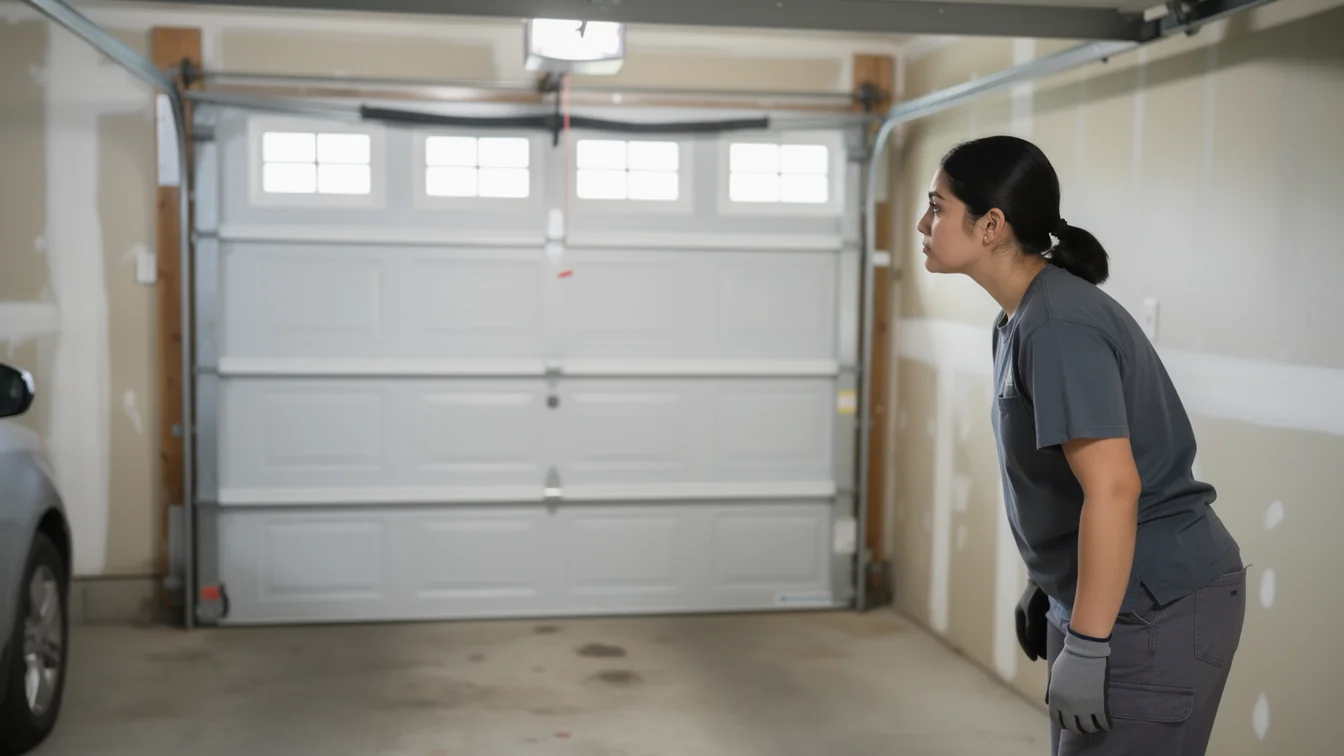
Start by running the door with the garage light off and the car out, so you can actually hear where the sound comes from. A grind near the top of the track usually means a dry or worn roller - cheap to fix, and something a homeowner can sometimes grease themselves if the roller still turns freely. A loud bang on the way up or down is more often the torsion spring or a cable, and that's not a DIY fix; springs under tension have hurt people who treated them casually. A rhythmic clunk every few seconds, in time with the door's travel, usually points to a bent track section or a roller that's actually cracked, not just dry. One honest limit here: we can't diagnose a spring or cable issue over the phone with any confidence, and we won't pretend otherwise - those need eyes on the actual hardware. If the noise changed suddenly, especially after a cold snap, treat it as worth a look rather than something to ride out through another season.
Frequently asked questions
Why does my garage door get noisier in winter?
Steel hardware contracts in cold weather, and Griffin's cold-moderate climate band brings real seasonal swings. Dry bearings, stiff tracks, and tensioned springs all react to that contraction, so noise that's been building quietly often becomes audible right after the first hard cold front of the season.
Does the age of my house matter for what's wrong with the door?
It can. Houses in our service area range from 1948 to 2007, with most built in the 1980s and 90s. Older torsion hardware tends to grind when dry; the lighter rollers and brackets common in 1980s-90s builds tend to bang or rattle loose instead. Knowing your home's era narrows down what to listen for.
Is a banging noise always a broken spring?
Not always, but a sudden bang on the way up or down is one of the more common signs of a torsion spring or cable problem, and it's not something to test yourself given the tension involved. If the bang is new and loud, treat it as a call, not a project.
Can I just oil everything and see if the noise goes away?
Sometimes, yes - a dry roller or hinge often quiets down with the right lubricant. But if the noise is a grind near the spring or a clunk tied to the door's travel rhythm, lubrication won't fix it and may mask a part that's actually failing.
Related garage door services in Griffin
More garage door guides
Book garage door service in Griffin
Call now or request a quote - tell us what the door is doing and where you are.